
-
 Up to 19% offVendor:Paul Hartmann AG
Hartmann Tamponadebinden made of cotton, different sizes
Regular price From 4,99 €Sale price From 4,99 € Regular priceUnit price 1,00 € per m4,99 € -

 Vendor:BSN Medical GmbH
Cutimed Sorbact, tamponade, antimicrobial wound dressing, sterile
Low stockRegular price From 339,75 €Sale price From 339,75 € Regular priceUnit price per339,75 € -
 Sold outVendor:Meditrade GmbH
Cotton tampons with thread, Ø 5 cm | Pack (1 piece)
Regular price 29,80 €Sale price 29,80 € Regular priceUnit price per29,80 € -
 Vendor:Paul Hartmann AG
Hartmann ValaClean Disinfectant Wipes Box | Carton (1 carton)
Low stockRegular price 24,03 €Sale price 24,03 € Regular priceUnit price per24,03 € -
 Sold outVendor:MaiMed GmbH
MaiMed-BT-sterile 45x45
Regular price From 71,24 €Sale price From 71,24 € Regular priceUnit price per71,24 € -
 Sold outVendor:MaiMed GmbH
MaiMed-BT-sterile 45x45, Rökochip, double packed
Regular price From 59,79 €Sale price From 59,79 € Regular priceUnit price per59,79 €

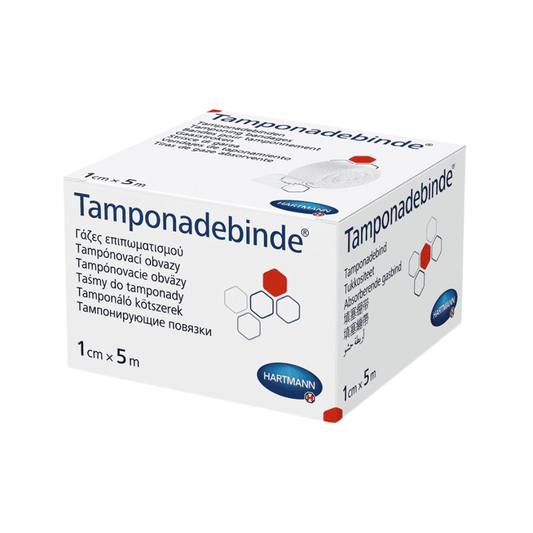


Tampons – Reliable Support for Wound Care and Medical Procedures
Tampons are an indispensable tool in modern medicine and nursing. They are primarily used in wound care, during surgical procedures, and in emergency medicine to stop bleeding, absorb wound secretions, or keep wounds open.
Professionals in hospitals, clinics, nursing facilities, and emergency services rely on tamponades when the highest level of safety and reliable quality are required. Thanks to their specific properties, they play a crucial role in supporting the healing process and maintaining hygiene standards.
What Sets High-Quality Tampons Apart
Tampons are available in various designs—from classic cotton tampons to modern variants with impregnations or special coatings. They offer a combination of high absorbency, stability, and user-friendliness.
Product benefits at a glance:
-
High absorbency for reliable absorption of blood and secretions
-
Soft, skin-friendly material such as cotton for high comfort
-
Various widths and lengths for a precise fit
-
Sterile packaging for use in clinics and operating rooms
-
Easy to cut and adjust depending on the wound condition
-
Retains its shape even with prolonged use
-
Wide range of applications, from nasal packing to surgical use
These features make tamponades a flexible and safe tool that provides quick and effective support in many medical situations.
Technical Details and Instructions for Use
Tampons are typically made of pure cotton or cotton blends. They are available in various sizes and lengths, allowing them to be individually tailored to the specific wound situation. Sterile versions are particularly suitable for surgical procedures or emergency care.
Typical applications include:
-
Stopping bleeding, particularly in surgery or trauma care
-
Absorbing wound secretions in acute or chronic wounds
-
Nasal packing for the treatment of nosebleeds
-
Open wound care in hospitals and outpatient settings
-
Postoperative care for stabilization and drainage
Best Practice Tips:
-
Open and use sterile tamponades only in a hygienic environment
-
If necessary, cut to size without compromising sterility
-
Dispose of properly after use and observe applicable hygiene standards
-
Store in dry, clean, and light-protected areas to ensure quality
These guidelines help healthcare professionals maximize the effectiveness and safety of the tamponades in their daily professional practice.
Summary and Outlook
Tamponades are an essential component of professional wound care. They offer flexibility, reliability, and the highest quality for use in hospitals, clinics, and nursing settings. Their versatility makes them an indispensable tool for healthcare professionals who bear daily responsibility for healing and hygiene.
Rely on tested quality and tailored solutions—with dressings that meet the high demands of everyday medical practice. In addition, the following product groups are recommended:
-
Compresses and gauze bandages for comprehensive wound care
-
Plasters and dressing materialsfor postoperative care
-
Disinfection and cleaning products to maintain hygiene standards
Thanks to fast delivery, proven quality, and an extensive product range, healthcare facilities and healthcare professionals can find the right solution for every situation.


